Moringa: Why Sahjan Belongs in Your Kitchen, Not Just Your Pharmacy
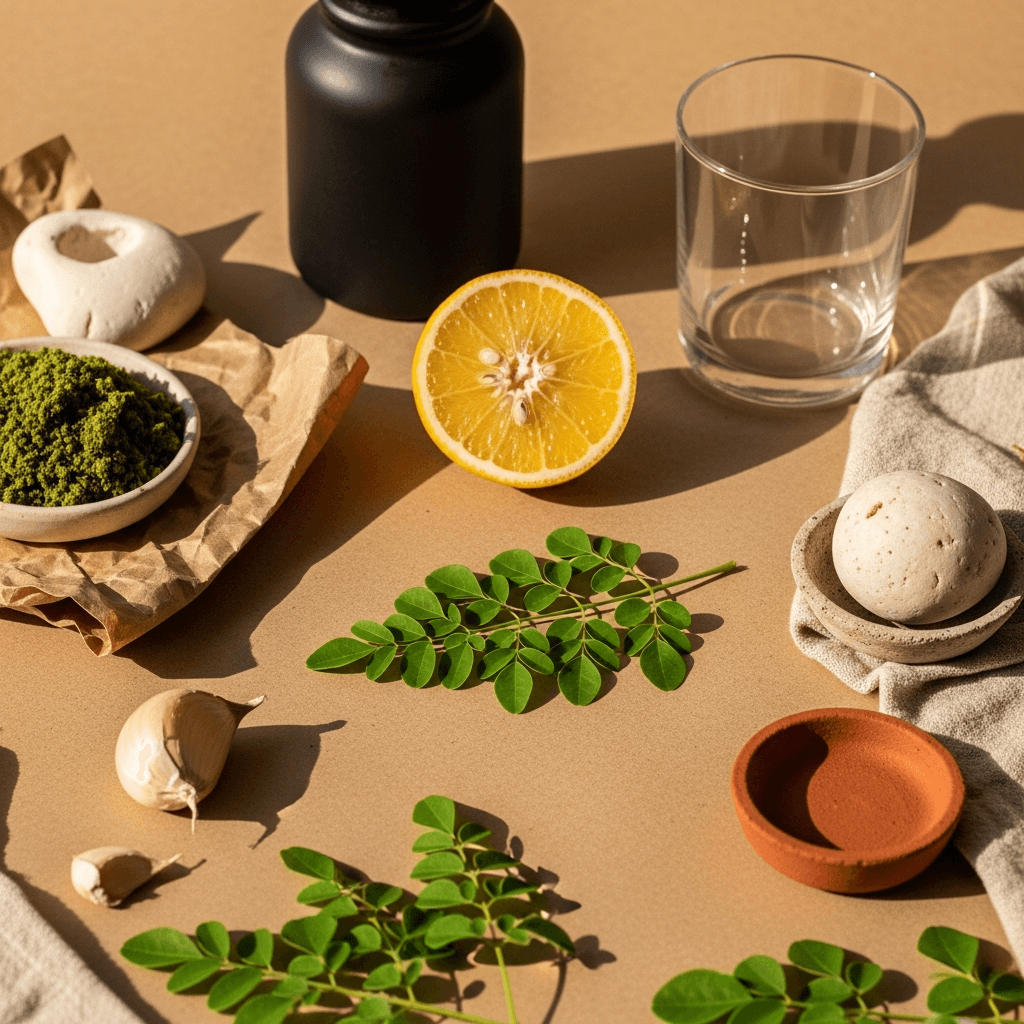
Long before wellness blogs started calling it a "superfood," moringa was just sahjan, murungai, or shevga. It was the tree hanging over the compound wall, dropping long, ridged drumsticks into our Sunday sambars.
Lately, it has returned to the spotlight in a powdered avatar. But behind the global hype is a very simple, incredibly hardy green that has earned its place in Indian kitchens for generations. Here is what it actually is, what it tastes like, and how to use it without making a fuss.
It’s just sahjan (and it’s always been here)
Moringa oleifera is native to the Indian subcontinent. Almost every part of the tree is edible, but in home cooking, we usually stick to two: the pods (drumsticks) and the leaves.
While we love scraping the pulpy insides of drumsticks in a hot bowl of curry, the leaves are where the dense nutrition hides. Gram for gram, these small, tear-shaped leaves are packed with iron, calcium, and plant protein. You don’t need a laboratory to tell you that—our grandmothers knew it when they added quick-wilted moringa leaves to a simple stir-fry with fresh coconut.
Let’s be honest about the taste
If you have ever tried drinking a glass of moringa powder dissolved in plain warm water, you know it can be a test of willpower.
Moringa has a distinct flavor. It is deeply earthy, slightly peppery, and has a mild bitterness—think of it as spinach with a stronger, slightly sharp personality. Trying to mask it entirely in a sweet fruit smoothie often backfires, resulting in something that tastes like grass-flavored berries.
The trick is to work with its savory nature, not against it.
Real-world ways to use it
You don’t need to reinvent your diet to include moringa. It pairs beautifully with classic Indian flavor profiles—especially anything with a bit of fat, acid, or spice to balance its earthiness. Here is how to slip it into your daily meals:
- In your rotis: Mix a teaspoon or two of moringa powder directly into your atta before kneading. Your rotis will turn a cheerful green, but the taste will remain subtle.
- Stirred into dal: Just like you would add kasuri methi or coriander at the very end, stir a spoonful of moringa powder into a hot, ghee-tempered yellow dal.
- With idli or dosa batter: Whisk a small spoonful into your morning batter. It pairs wonderfully with coconut chutney.
- The buttermilk shortcut: Shake a pinch of moringa into cold, salted chaas with roasted cumin powder and mint.
If you are looking for a reliable, single-origin moringa powder without any fillers or additives, we source ours from organic farms in India (₹299 for 100g, shipped pan-India). But whether you use a powder or pluck fresh leaves from a neighborhood tree, getting this humble green back into your kitchen is a simple, honest win for everyday eating.
Nothing added. Nothing hidden.
Single-origin moringa and fresh tofu, with the whole label on the front.
Shop Bare Roots